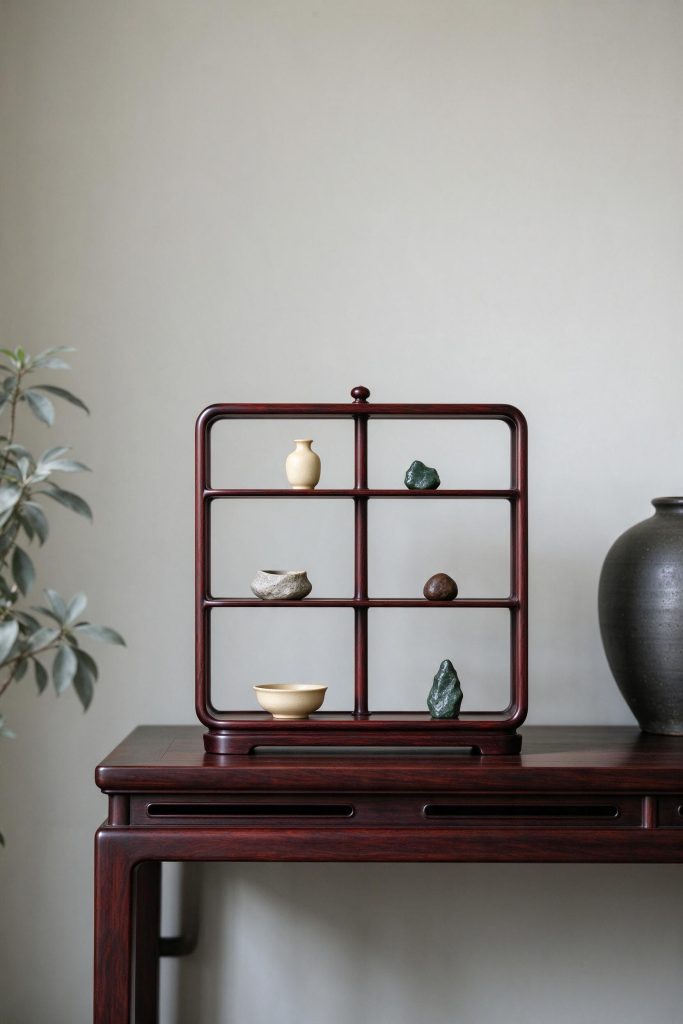
A collection displayed well looks intentional; displayed badly, it looks like storage. A curio shelf solves this by giving each object its own frame and a little air.
One object, one space
The main rule is spacing. Each object should have room around it, so the eye can register it individually. Crowding is the fastest way to make a collection feel like clutter.
Vary height, not density
Arrange objects of different heights across the tiers so the display has rhythm. Keep the tallest pieces toward the back or the ends, and leave one tier partly empty to give the whole a pause.
Materials that recede
Rosewood and dark hardwood shelves recede visually, letting the objects carry the attention. Light woods suit pale ceramics; dark woods suit stone and bronze. Match the shelf to the collection rather than to the room’s other furniture.
Rotate
A display is not permanent. Rotating pieces every few months keeps the arrangement alive and lets you enjoy more of what you own. Store the rest carefully and bring them out in turn.
A curio shelf is a small architecture for attention. Used well, it makes a few objects feel like many.