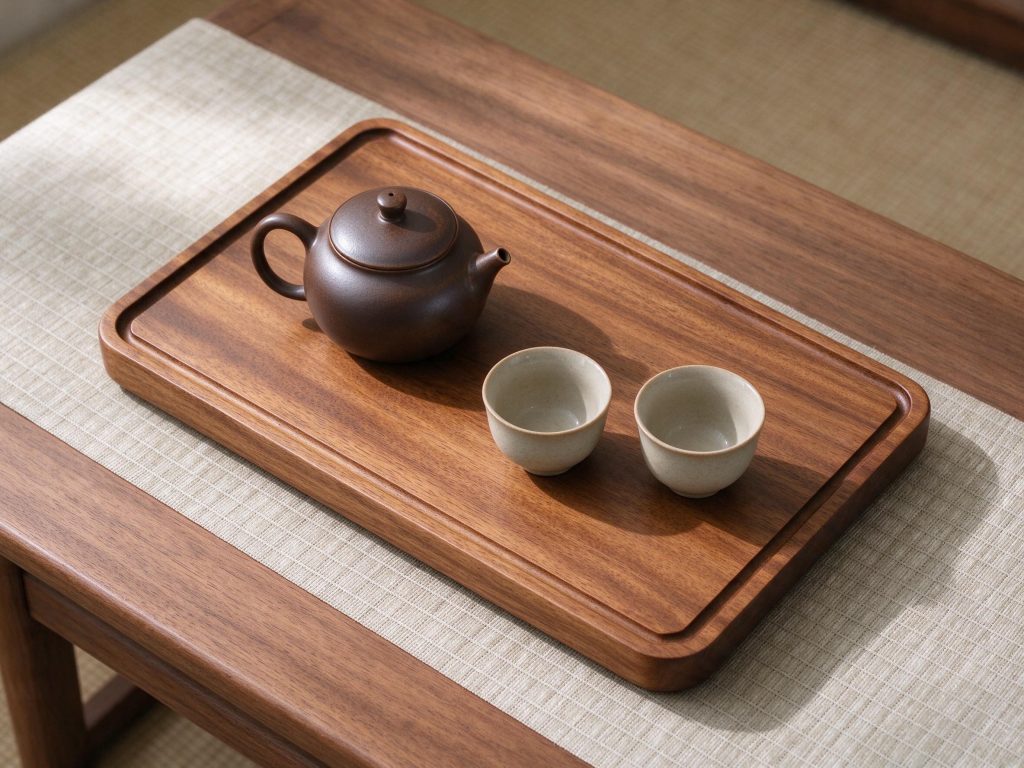
A tea tray is the stage on which a tea session happens. It catches the water, holds the vessels, and sets the tone of the ritual. The three common materials, wood, stone, and bamboo, each behave differently and suit different habits.
Wood
Rosewood and other dense hardwoods are the traditional choice. They are warm to the touch, absorb small spills, and develop a patina over years of use. Wood trays suit long, unhurried sessions and pair naturally with clay and porcelain teaware.
Stone
Stone trays, particularly slate and carved black stone, are cool, heavy, and stable. They handle larger volumes of water well and suit dry-brewing, where water is poured off rather than pooled. Their weight makes them feel permanent.
Bamboo
Bamboo is light, affordable, and easy to move, which makes it a good choice for a portable setup or a small space. It is less durable than hardwood but ages gracefully if dried after use.
What to check
Look for a tray with a clear drainage path and a rim high enough to contain spills. A flat surface that stays level matters more than ornament. Size the tray to your usual number of cups, not to the largest gathering you might host.
The right tray disappears into the session. You notice it only when it is missing.