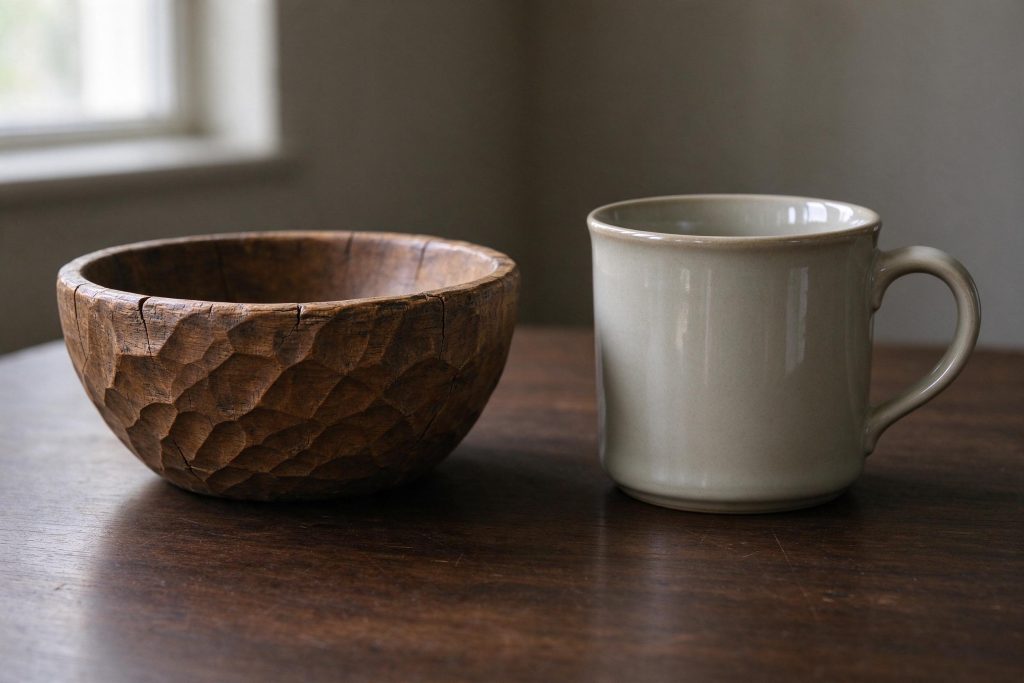
Put a handcrafted object and a mass-produced one side by side and use both for ten years. The difference is not only in how they look, but in how they wear.
Material quality
Handcrafted pieces are usually made from solid materials: a single block of hardwood, a slab of stone, a thrown clay body. Mass-produced pieces often use veneers, composites, or thin coatings that fail first. Solid material can be repaired and refinished; a veneer cannot.
Repairability
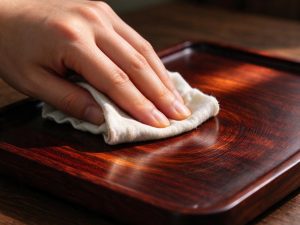
A carved wooden object can be oiled, sanded, or re-glued. A stone piece can be re-polished. Because these objects are made by hand, the techniques to maintain them still exist. A moulded plastic object, once cracked, is finished.
The patina
Handcrafted objects develop patina: the darkening of wood, the softening of stone, the wear of a handle where a hand rests. Mass-produced finishes are designed to resist change, which means they fail visibly rather than age gracefully.
Attention
There is also the matter of intention. A handmade object carries the decisions of a maker, and that shows in the details: the finish of an edge, the balance of a form. Those details are what make an object worth keeping.
Buying fewer, better objects is not only an aesthetic choice. It is the practical one, over time.