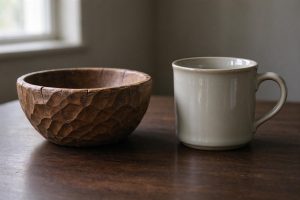
A custom carving begins with something that already matters: a photograph, a name, a date, a family. The craft is in translating that into wood without losing what made it worth remembering.
Start with a clear subject
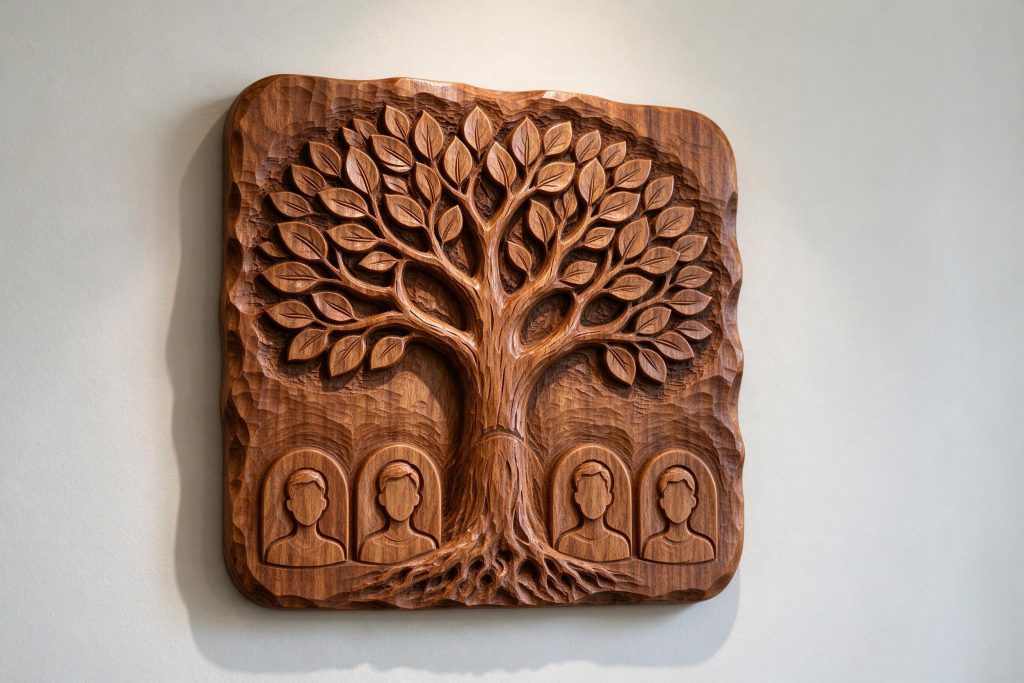
The strongest custom pieces are specific. A single portrait, a family tree, a pet, an anniversary date. Trying to include everything usually weakens the result. Decide what the one thing is, and let the carving carry it.
Choose the wood for the meaning
Walnut is warm and dark, suited to portraits and keepsakes. Camphor and cypress carry a natural fragrance. Rosewood is dense and formal. The wood should feel right for the occasion as much as for the design.
Scale and placement
Decide where the piece will hang or sit before you commission it. A relief meant for a hallway reads at a distance; a small keepsake is handled up close. Scale the detail to the viewing distance.
Expect the grain
Wood is not paper. The grain will move through the carving, and a good carver works with it rather than against it. The result is never a perfect copy; it is an interpretation, which is what makes it worth owning.
A custom carving is slower to make than a print and impossible to duplicate. That is the point.